
EU Carbon Border Charge Would Reach $2.8 Billion in Canadian Exports
Internal Global Affairs documents show Canada's carbon price does not qualify for an exemption under the EU mechanism, which begins charging importers in 2027.
By Camila Herrera ·
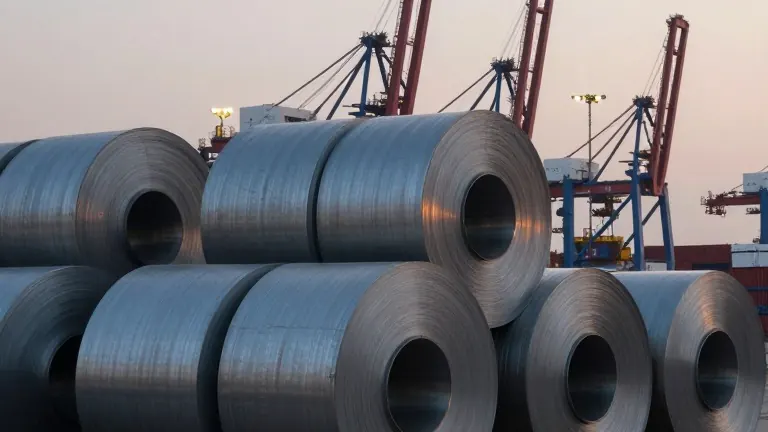
Canada is facing a European carbon charge on its metals with no exemption in sight.
Internal Global Affairs Canada documents obtained through access to information describe the European Union's Carbon Border Adjustment Mechanism as a border charge, and a memo signed Dec. 10, 2025 calls it effectively a carbon tariff. The same documents state that Canadian iron, steel and aluminum will not be exempt, even though Canada maintains a national carbon price and has a trade agreement with the EU dating back a decade. Global Affairs estimates $2.8 billion worth of goods exported each year fall under the levy, concentrated in metals already hit by U.S. tariffs.
The exposure is uneven across the country. Newfoundland and Labrador sends an annual average of $885 million in iron and steel exports that would fall under the charge, close to half the province's total. Quebec's exposed aluminum, iron and steel exports run about $792 million a year. Those figures average data from 2021 through 2024, and the documents note that exposure could rise as Canadian goods seek buyers beyond the United States.
The mechanism starts with European importers paying a carbon charge at the border in 2027 and phases in fully by 2034. The EU exempts Switzerland, Norway and Iceland, and soon the United Kingdom, because their carbon pricing connects to or sits inside the EU Emissions Trading System. The briefing note says an exemption is not currently possible for Canada because Ottawa's price is not linked to Europe's. It puts the EU carbon price at about $134 per tonne in 2025 against $95 per tonne in Canada, and notes that the Carney government's energy accord with Alberta lowered the Canadian figure further.
Canada is advocating for recognition of its industrial carbon pricing systems, Environment and Climate Change Minister Julie Dabrusin's office has said. In an Oct. 22 interview, Dabrusin did not say whether negotiators were making progress. EU officials said both sides are working toward the same kind of baselines and processes, without defining what that means.
Aaron Cosbey, an economist at the International Institute for Sustainable Development, estimates Canadian steel could cost an additional $150 per tonne by 2034, a figure he said is more than 10 per cent of the open market price for a tonne of steel. Ross-Linden Fraser, an acting director at the Canadian Climate Institute, called the mechanism a big deal conceptually. Mark Selby, CEO of Canada Nickel, said its Timmins, Ont., project would use low-carbon electricity and carbon capture, and that shipping millions of tonnes of steel to Europe would translate into pennies per tonne over the long run. Rio Tinto and ArcelorMittal declined to comment.
The memo also refers to carbon border mechanisms under development or assessment in the United Kingdom, Australia, Japan and Turkey. Carbon charges would apply to Canadian steel, aluminum, iron and cement exporters, who already must measure emissions embedded in exports and have them reviewed by an accredited verifier. Canadian diplomats were still seeking an agreement with Brussels ahead of the Canada-EU Summit in Montreal this week, where Prime Minister Mark Carney said on Tuesday that negotiations were beginning for Canada to become a closer strategic partner to the 27-member bloc.
Source: CBC News