Harris County drops repeat domestic violence charges for classes
District Attorney Sean Teare says each case is unique, but records show 713 charges were dismissed in 2025 for alternative resolutions like anger management courses.
By Camila Herrera ·
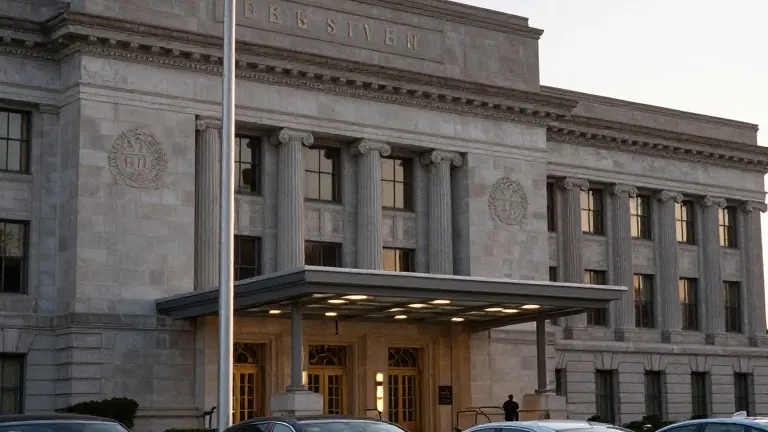
Residents of Harris County, Texas, are facing a new standard for domestic violence justice. Prosecutors are dismissing family violence charges in exchange for defendants completing educational classes or making charitable donations. This practice, known as alternative resolution agreements, is reshaping how the district handles repeat offenders.
The approach has drawn scrutiny from advocates who argue the prescribed courses do not match the severity of the crimes. In 2025, 6% of all resolved domestic violence cases ended with these agreements. The most common requirement was an anger management class. Some defendants, however, had their charges dropped after donating to the Houston Food Bank.
The pattern is evident in the case of Atamvir Singh. Records show he was arrested for injury to a child in 2012. That charge was dismissed when he took a parenting class. In 2017, he faced a family assault charge, which was also dismissed after he completed an anger management course. In 2025, he was charged with continuous violence against family. The charge was dropped after he agreed to take anger management classes again. He was charged with continuous family violence just months later. That final charge was dismissed after he passed away this summer.
Shane Garrett experienced a similar cycle. He received a dismissal for a family violence charge after donating to the Houston Food Bank. Just months later, he was charged with assault on a family member. His new charge was also dismissed in exchange for a class. Cyera Hardeman had her family violence charge dismissed after agreeing to take two classes: one for anger management and one for decision-making.
District Attorney Sean Teare defended the practice when asked if a class is an appropriate punishment for someone who beats a spouse. "It, quite frankly, all depends," Teare said. "Each case is different." He noted that domestic violence is among the most difficult cases his office prosecutes. He cited a lack of admissible evidence, such as 911 calls or photographs of injuries, as a reason for many dismissals. From 2021 to 2023, two-thirds of resolved domestic violence cases were dismissed. Fourteen percent of those were at the victim's request.
Amy Smith of the Harris County Domestic Violence Coordinating Council disagreed with the use of anger management courses. "Anger management is for your road rages; it's for your bar fights," Smith said. She argued that batterer's intervention programs are more appropriate for intimate partner violence. "Battering intervention is how to manage the violence against your intimate partner, which is a huge difference from how to manage your anger," she explained.
In 2025, 69% of all resolved domestic violence cases were dismissed. In 26% of those cases, prosecutors stated they could not prove guilt. In 14% of the cases, the complaining witness requested the dismissal. The remaining 713 domestic violence charges were dropped due to alternative resolution agreements.
Criminal defense attorney Jed Silverman said many of these cases would likely have been dropped regardless of the agreement. "It's better to get something, to get a person to take a class even if they're taking it over and over again, versus nothing at all," Silverman said. The District Attorney's office and a company called National Online Training both declined to provide copies of the courses used.
Course materials for an anger management class designed for substance abusers include monitoring anger with a meter and forming a control plan. Students are urged to take a deep breath and exhale slowly. The materials also include a muscle relaxation exercise.
If you need help getting out of a domestic violence situation, call the Houston Area Women's Center 24/7 hotline at 713-528-2121 or call AVDA at 713-224-9911. You can also click here to chat with an advocate online. If you are deaf or hard of hearing and need help, call 713-528-3625.