Ukraine falls behind Moldova in EU bid
New roadmaps place Montenegro in the lead, while Kyiv struggles to keep pace with its neighbors in the race for membership.
By Grace Anderson ·
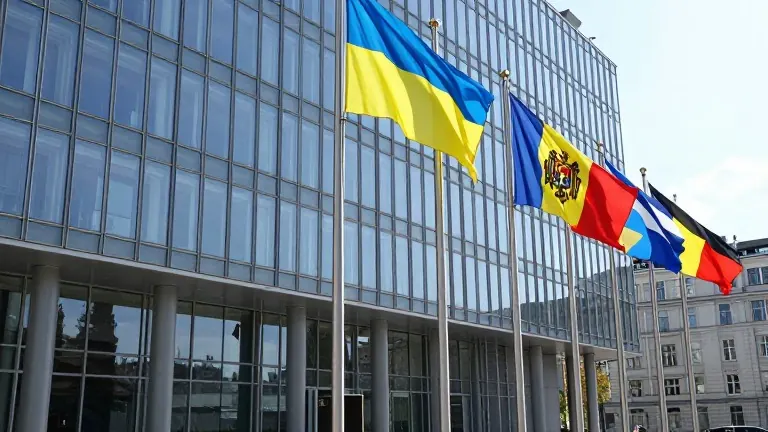
Ukraine has dropped to the bottom of the leading group of countries seeking to join the European Union. According to the European Commission's 2026 enlargement report and new progress roadmaps, Moldova has now overtaken Kyiv in the race. The report identifies Montenegro, Albania, and Moldova as the top three candidates, with Ukraine following at a distance.
The new roadmaps forecast specific timelines for each country based on their reform speeds. The Commission projects that accession negotiations with Montenegro will finish this year. A treaty for Montenegro is expected to be prepared by the end of 2026, leaving only the ratification process. Albania and Moldova are both scheduled to complete their treaties in 2028. Ukraine trails behind these three nations.
Readiness scores show how much the rankings have shifted. Montenegro has reached an average score of 3.98. The EU defines this level as good alignment with its laws and sufficient for full membership. Three years ago, Montenegro scored 3.1, Ukraine scored 2.3, and Moldova scored 1.9. Since then, Moldova has increased its score by nearly a full point. Ukraine has gained only 0.2 points in the same period.
Analysts note that Montenegro, Albania, and Moldova accelerated their reforms once the EU showed a willingness to expand. Ukraine slowed down during this period. The Commission states that nothing irreversible has happened yet. Kyiv remains in the leading group for political reasons, even if it delays Moldova's progress. However, the analysis warns that the gap may become permanent if Ukraine does not speed up its reforms immediately.
In 2025, Kyiv pushed for a fast track known as political accession. This proposal would have tied membership to war and peace negotiations. The goal was to secure EU membership before completing all reforms. Brussels has repeatedly stated that reforms are a prerequisite for entry. The fast track idea did not gain traction.
The Commission raised Ukraine's score slightly this year. It noted that improvements occurred in some areas despite the actions of Ukrainian authorities rather than because of them. Brussels cites wartime conditions as a reason for slower progress. For example, it argues that air raid alerts make it difficult for the Verkhovna Rada to hold votes. The analysis counters that alerts did not prevent parliament from voting on an anti-corruption strategy or reforms to the State Bureau of Investigation.
The situation echoes 2013, when Ukraine and Moldova both sought visa-free travel to the EU. Kyiv was reluctant to implement required reforms at the time. The EU eventually split the package. Moldova received visa-free travel, while Ukraine waited three more years. Analysts warn that the stakes are higher now because full membership is at issue.
Calculations from last year suggested Ukraine would need more than 20 years to reach basic alignment at its current pace. The geopolitical window opened by Russia's aggression may not allow for such a long delay. The Commission says Ukraine showed signs of quickening its pace this autumn. The decision now rests with Kyiv and the Verkhovna Rada. They must determine if this is a genuine effort to catch up. The stated priority is the fundamentals, including rule of law, human rights, and anti-corruption.
The analysis points to a stalled bill as evidence of paralysis. The bill covers a small part of the legislation needed for a register of bank accounts and safe deposit boxes. This register is required for Ukraine to join the Single Euro Payments Area. The measure has failed to pass parliament. Some opponents of the bill describe themselves as pro-European.