14 Complaints Target JBS Financiers Over Amazon Deforestation
A new legal coalition accuses the world’s largest meat company and its European banks of laundering proceeds from illegal land clearing.
By Camila Herrera ·
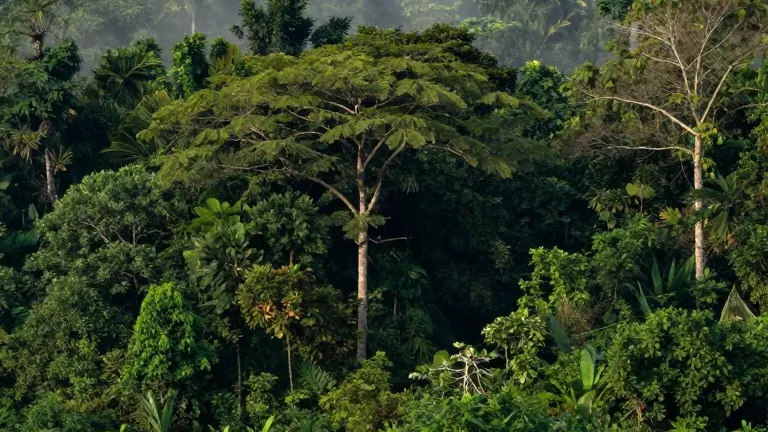
A coalition of environmental and human rights groups filed 14 legal complaints against JBS and its financial partners in Europe on Wednesday. The filings accuse the meat giant and its banks of facilitating money laundering tied to illegal deforestation in the Amazon. The complaints were submitted to financial regulators in Britain, Ireland, Germany, and the Netherlands. Britain’s National Crime Agency and Dutch professional oversight bodies also received the documents.
The Transnational Legal Coalition, or TLC, aims to trigger investigations under anti-money laundering laws. Bláithín Quigley, the coalition’s coordinator, stated that illegal deforestation is a crime rather than a business model. He noted that indigenous communities have fought corporate profiteering from this destruction for decades. The group was formed to coordinate legal efforts against serious environmental crime across global value chains.
JBS responded by saying it had not received the data or methodology behind the allegations. The company said this prevented it from independently evaluating the claims. JBS stated that it has monitored cattle suppliers in the Amazon since 2010 using satellite imagery and geo-referencing. The company claims its system analyzes more than 600,000 square kilometers of Brazilian territory daily and automatically blocks farms with illegal deforestation or slave-like labor.
The complaints name specific institutions including Barclays, Standard Chartered, Rabobank, ING, and BlackRock. They also target Dutch law firm Loyens & Loeff and accounting firms EY and KPMG. The legal argument rests on JBS’s ties to these European financial institutions. The TLC noted that around 70% of Brazilian beef is consumed domestically, with North America as the largest export market. Europe accounted for 18.8% of Brazilian beef exports.
Rabobank said its policy bars financing deforestation for new clients with illegally deforested land since January 1, 2018. Banco do Brasil stated it complies with anti-money laundering rules and monitors environmental risks. ING and KPMG said they had not seen the complaint and could not comment on individual client relationships. Standard Chartered and Loyens & Loeff cited client confidentiality, while Barclays and BlackRock declined to comment.
The complaints rely on research by the nonprofit AidEnvironment, which tracked cattle movements through 21 JBS slaughterhouses in five Amazon states. The analysis identified 3,329 direct suppliers and 9,247 indirect suppliers. The group argues that moving cattle between farms can obscure their origins from illegally cleared land. This practice, known as cattle laundering, allows animals to appear compliant before slaughter.
JBS operates in more than 180 countries and reported $86.2 billion in revenue in 2025. The company began trading on the New York Stock Exchange in June 2025 after incorporating in the Netherlands. JBS moved its headquarters from Sao Paulo to Amsterdam as part of that transition. A 2023 audit by Brazil’s Federal Prosecution Service found that 94% of JBS cattle purchases came from legal sources.
More Business · Bad Service · Report a business · Got a Story?