Breaking: Chip Stocks Plunge as Nvidia Loses $400 Billion in Value
The Philadelphia Semiconductor Index suffered its worst day since 2020, erasing billions in market value as investors reacted to midterm election results.
By William Turner ·
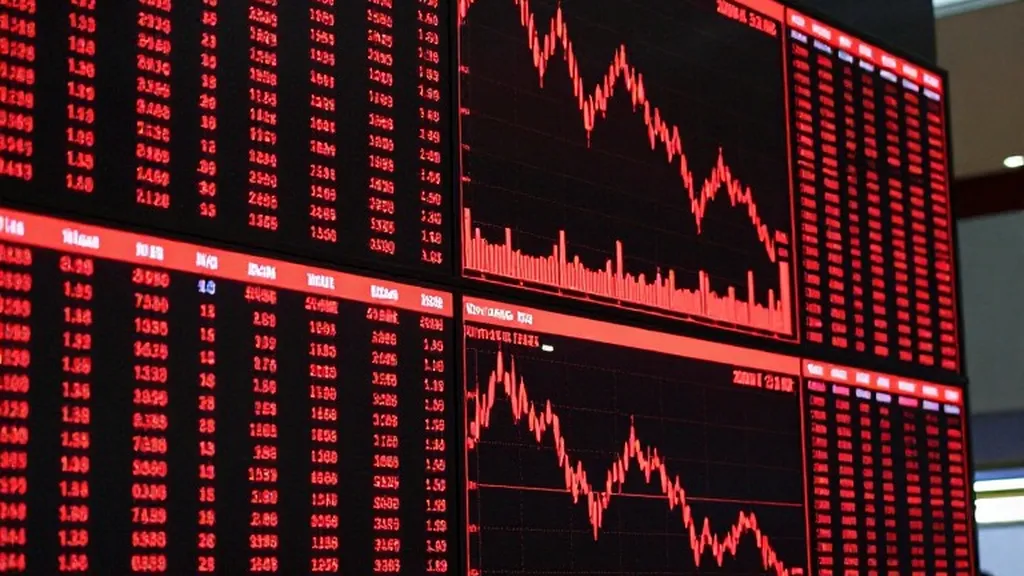
The semiconductor sector experienced a historic collapse on Thursday as the Philadelphia Semiconductor Index fell more than 12 percent, marking its worst single day since the market breakout in March 2020. This sharp decline reflects a broader rout in technology stocks following the Democratic sweep of the House and Senate in Tuesday's midterm elections. The index tracks thirty of the largest chip companies, and its steep drop signals deep concern among investors about the future of the artificial intelligence trade. The selling pressure was not limited to a few names but spread across the entire industry, indicating a sector-wide reassessment of valuation and growth prospects.
Nvidia, a central pillar of the recent market rally, was the biggest loser in the Dow Jones Industrial Average, shedding more than $400 billion in market value. The company's stock fell 9.2 percent, a drop that significantly outweighed the decline of other major financial institutions like Goldman Sachs, which fell 3.7 percent. The magnitude of Nvidia's loss underscores the heavy reliance of the broader market on a small group of high-growth technology firms. As the largest holder of market value among chipmakers, its performance often sets the tone for the entire sector, and today's figures demonstrate how vulnerable that leadership position can be to political shifts.
The pain was shared by other major players in the chip industry, with SanDisk falling more than 22 percent and Western Digital dropping 17 percent. AMD and Micron each saw their values decline by more than 17 percent, while Intel fell 10.3 percent. These moves were not isolated incidents but part of a coordinated sell-off that hit the entire supply chain. The Philadelphia Semiconductor Index has now fallen more than 30 percent since the beginning of October and is almost 40 percent below its peak in June. This extended slide highlights that today's crash is the culmination of a longer period of weakness in the chip market, rather than a sudden, unforeseen shock.
For local readers in Pinellas County, this event has direct implications for retirement accounts and personal savings. Many 401(k) plans and individual retirement accounts hold significant amounts of technology stocks, particularly through index funds that track the S&P 500 or the Nasdaq Composite. When the S&P 500 falls 4.3 percent and the Nasdaq drops 5.5 percent, the value of these retirement portfolios decreases accordingly. For savers and small investors, such days can trigger anxiety about the stability of their nest eggs. It is a reminder that market values are not static and can change rapidly based on political news and economic expectations, affecting the purchasing power of those who rely on these investments for their future.
The catalyst for this crash was the political outcome in Texas and other key states. Democrat Gina Hinojosa won the race for governor after campaigning on an immediate moratorium on new data center construction. In Texas, voters also rejected data centers in a series of local ballots, and Democrats won Senate seats in states with large concentrations of planned facilities. These results have raised fears that state-level restrictions will slow the build-out of the infrastructure required for AI. Investors are now weighing whether these regulatory hurdles will pressure companies tied to the artificial intelligence trade, adding to broader concerns that the huge sums being spent on AI may not yield the expected returns.
Analysts are divided on the long-term impact of these political shifts. Dan Ives, a tech analyst, noted that Democrats taking control of the Senate will create major hurdles for AI and tech legislation in the Beltway over the next two years. He described the midterm results as a clear sign that the pace of data center build-out will start to slow. Meanwhile, Ted Parkhill, founder of Incline Investment Management, stated that the market is moving from the promise of AI to the price of AI. He emphasized that while AI will be transformative in the long run, not every AI-related stock is currently priced appropriately, suggesting that further turmoil is likely as the market adjusts to this new reality.
The volatility of the day was captured by the Cboe Volatility Index, which jumped to above 28, its highest reading since late March. This surge in the fear gauge indicates a significant shift in investor sentiment from confidence to caution. The 10-year Treasury yield fell to 4.83 percent as investors sought the safety of bonds, a classic sign of risk aversion. The contrast between the previous day's rally, where the Dow saw its biggest gain of the year, and today's crash highlights the extreme whiplash that can occur in modern markets. This rapid reversal serves as a stark reminder of the unpredictability that defines the current economic landscape.
The Philadelphia Semiconductor Index's slide since June represents a significant drawdown for investors who have held these positions for several months. The index is now almost 40 percent below its peak, a level that many consider a correction or even the start of a bear market for the sector. This prolonged decline suggests that the issues facing chip stocks are structural rather than temporary. As the market digests the implications of the election results, investors are forced to reconsider their exposure to technology and AI-related companies. The day's events will likely be studied for years as a case study in how political decisions can impact global financial markets and the specific sectors that drive technological innovation.
More Business · Bad Service · Report a business · Got a Story?