Democrats seize both chambers
Surprise wins in deep-red states like South Carolina and Kansas drive a historic shift in congressional control.
By William Turner ·

Democratic candidates have captured the U.S. Senate and are projected to control the House of Representatives, marking a decisive reversal in national power. CBS News, a BBC partner, projected the House win just after 03:00 GMT on Wednesday, which corresponds to 22:00 EST on Tuesday. The party now holds a majority in both chambers of Congress.
Senate results exceeded internal expectations for the Democratic Party. While North Carolina was considered a likely pickup, victories in South Carolina and Kansas represented major deviations from recent history. Kansas had not returned a Democratic senator since 1932, and South Carolina had not elected one since 1998. Pre-election polls in South Carolina had indicated a lean toward the Republican side. The state had been a deep red stronghold for years.
The geographic shift extended to other traditionally conservative states. Texas, Iowa, Ohio, and Maine all turned blue in the Senate races. Texas moved nine points toward Democrats compared to the 2024 Senate race. One seat in Alaska remains a toss-up, and Mississippi is currently on a knife edge, according to CBS News data.
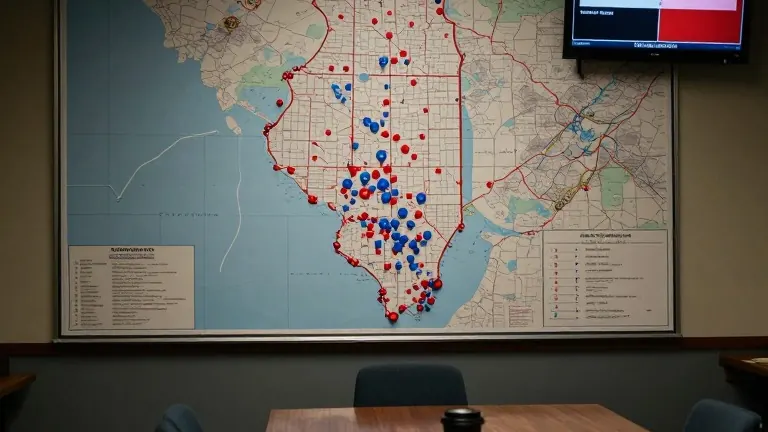
In the House, Democrats are securing the gains needed for control while targeting a larger margin. Florida districts 14 and 25, which Democrats held previously, proved critical. These districts were redrawn to favor Republicans, shifting majorities from voters who supported Kamala Harris in 2024 to those who voted for Donald Trump. Despite the redistricting, Democrats won these seats. Florida district 22, also redrawn for Republican advantage, saw a Democratic victory as well.
Voting patterns among Hispanic voters in Florida appear to have driven key results. Exit polls suggest this demographic backed Democratic Senate candidate Angie Nixon by 55 percent to 44 percent against Republican Ashley Moody. This represents a shift from 2024, when an estimated 55 percent of Hispanic voters supported Donald Trump. Nationally, the economy emerged as the primary concern for voters, followed by the state of democracy.
When asked about Donald Trump's policies, more than two-thirds of polled voters believed his actions worsened economic conditions. The data indicates a broad dissatisfaction with the current economic trajectory among the electorate. The results reflect a coordinated movement across multiple regions that defied earlier polling projections.