
Gardeners advised to chop spent plants and cure calla lily rhizomes
Experts recommend leaving healthy foliage in beds to protect soil microbes, while specific steps are outlined for saving non-hardy houseplants and fixing onion rot.
By Grace Anderson ·
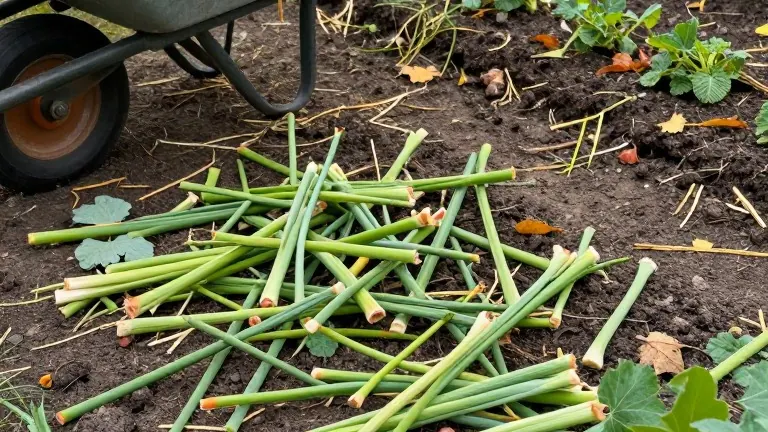
Fall maintenance for vegetable and annual flower gardens requires a shift in strategy to protect soil health and prepare for winter.
Gardeners should adopt a chop and drop method for spent vegetable plants such as beans, lettuces, and peppers. Instead of pulling these plants from the ground, workers are instructed to cut them at the base and let the foliage fall directly onto the soil. This layer of organic matter shields soil microbes from the elements and reduces the physical labor of clearing beds.
Beds containing diseased plants require a different approach. Those specific plants must be cut and removed entirely. The exposed soil in those spots should then be covered with hay, straw, or chopped leaves. Sunflowers that have finished blooming should also be cut and moved, allowing any remaining seeds to drop into new areas for self-sowing next year. Garlic and strawberry beds need similar winter protection from hay, straw, or leaves.
Container plants require preparation to save on future costs. Healthy and disease-free plants should be removed from their pots, and the top six inches of potting soil should be discarded or composted. The remaining soil goes into a bucket to be mixed with new potting soil in the coming spring. Clay pots should be emptied and stored, and garden hoses must be drained of water before winter storage.
Pat, a reader, asked how to care for a blooming calla lily that has finished its season. Because calla lilies are not hardy in local climates, they cannot overwinter outdoors. The rhizomes should be dug up and cured for one week in a warm room. They then go into a perforated plastic bag with moistened peat moss or sawdust. The bag must be stored in a room at 50 degrees Fahrenheit with 40% humidity to ensure the plant survives until repotting in the spring.
Bob from Addison reported that his yellow onions turned soft and pulpy after being stored in a garage. He grew them in composted raised beds with local clay soil. The problem likely stems from center rot, a fungal disease that enters through leaves, insect damage, or excess nitrogen. Warm and humid weather during the growing season can also cause this issue. For the next season, experts suggest growing long day varieties in raised beds with well-drained soil.
Beth asked when to prune a cherry tree to make the fruit easier to reach. The answer is late winter. However, severe pruning to reduce the tree height will eliminate the crop for the following year. This reduction sets up the tree for a more accessible harvest in future seasons.