Knutson revives 1985 Lutheran cookbook recipe for date torte
A home baker tests a dense, flourless dessert from a North Dakota church publication, finding it suits those who prefer chewy textures over fluffy cakes.
By Camila Herrera ·
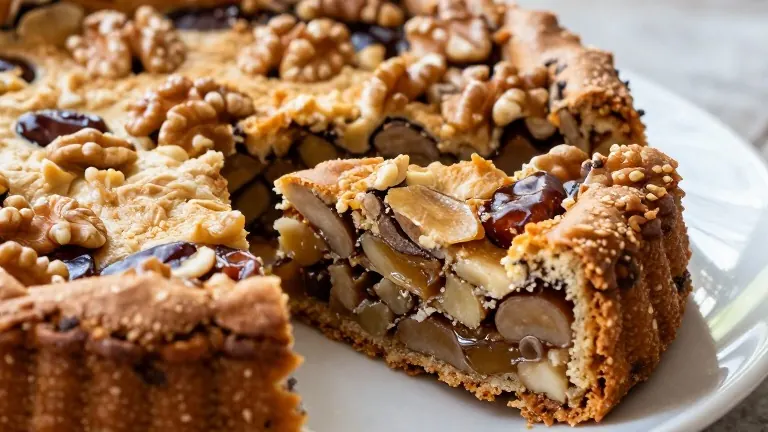
Local home baker Knutson is promoting a Date and Nut Torte as a viable alternative to standard pumpkin pies for Thanksgiving tables. The recipe originates from Mabel Olson, a member of the Oak Valley American Lutheran Church Women in Velva, North Dakota. Knutson discovered the dish while researching "The Joy of Sharing," a church cookbook published in 1985.
The dessert defies standard cake structures because it omits flour. Instead, the batter relies on a cup of fine breadcrumbs and chopped walnuts to achieve its form. This substitution creates a dense consistency that Knutson described as resembling a light-textured fudge. The lack of leavening agents means the torte does not rise during baking, resulting in a flat, short profile distinct from traditional fluffy cakes.
Knutson prepared the torte by beating four eggs with a cup of sugar. The baker then folded in two cups of chopped dates and walnuts, mixing them with the breadcrumb and baking powder blend. The mixture was baked at 350 degrees Fahrenheit for 35 minutes. Although the original instructions recommended a 9-inch square pan, Knutson used a fluted-edge tart pan for the first attempt.
The serving method presented a culinary puzzle. The 1985 instructions suggested cooling the torte and scooping it into bowls with a spoon, a technique more common for puddings. Knutson initially sliced the baked good into wedges, finding this presentation more practical. A second attempt followed the original guidance, with the torte served in a bowl. Both methods produced a similar flavor profile, though the baker preferred the wedge shape.
Historical culinary texts support the unique texture of this dessert. James Beard, in his book "American Cookery," noted that date nut tortes are often served like puddings or cut into thin strips for tea cakes. Beard compared the dish to a typically Viennese dessert, describing it as having a firmer consistency than traditional American cakes. His version included egg butter and flour, whereas Olson’s recipe uses breadcrumbs and egg whites.
The primary ingredient, the date, remains a polarizing choice for younger diners. Knutson’s daughter rejected the dessert due to its chewy texture. Authors Janet Letnes Martin and Allen Todnem previously observed that little children rarely eat date bars. Dates are the fruit of the Phoenix dactylifera palm, native to northern Africa and the Middle East. Commercial production now occurs in hot, dry regions including California and Arizona.
In Western nations, semi-dry dates are common, while fresh soft dates remain a staple in the Middle East. During Ramadan, Muslims often break their fast with these fruits, following the tradition of the prophet Muhammad. For Knutson, the date serves as a nostalgic link to previous generations. The baker now considers the torte an easy addition to the Thanksgiving menu or any regular evening meal.