Site Prep for New Homes Can Cost $40,000 or More
Soil conditions and terrain drive costs that vary widely between $3,000 and $25,000, requiring careful budgeting before construction begins.
By William Turner ·
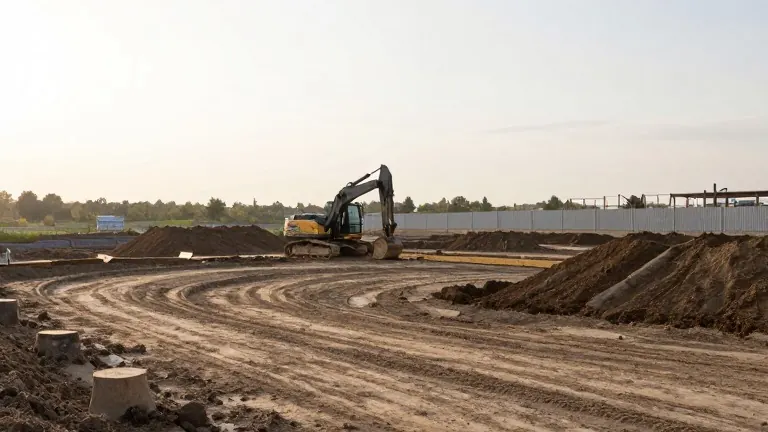
The cost to prepare land for a new house varies widely based on terrain and soil conditions.
Basic preparation for a straightforward residential lot typically ranges from $3,000 to $8,000. More complex projects involving extensive clearing or deep basement excavation can cost between $10,000 and $25,000. In difficult cases, expenses can exceed $40,000.
These figures represent planning ranges rather than fixed national prices. The final bill depends on what lies beneath the grass. Tree roots, buried rock, unstable soil, and poor drainage can turn an inexpensive parcel into an expensive construction project.
According to 2026 cost estimates published by Angi, general site preparation averages approximately $3,800 nationally. The reported range for these projects is $1,300 to $5,600. Foundation excavation alone may cost $1,500 to $10,000, with difficult projects exceeding that amount.
Homeowners should budget separately for land clearing, grading, and foundation excavation. A low initial quote may exclude hauling, drainage, and testing. Soil conditions, slopes, access roads, and equipment requirements can change site preparation costs by thousands of dollars.
Contractors price work based on equipment time, material movement, labor, and project risk. A larger property does not always require extensive preparation. A 2-acre parcel might need only a 4,000 square foot construction zone cleared.
Access roads, septic systems, drainage routes, and utility trenches expand the disturbed area. Removing large trees or concrete foundations requires additional machinery. Sandy soil, compacted clay, and bedrock behave differently during excavation, often requiring specialized breaking equipment.
Sloped properties may need cut-and-fill operations or retaining structures. Poor drainage introduces additional expense as water must be directed away from the future foundation. Labor rates also vary across the United States, with crews in rural Texas or Oklahoma facing different costs than those in California or Massachusetts.
A detailed construction budget separates work into measurable categories to make competing bids easier to compare. For example, removing soil from a 40-by-50-foot area to an average depth of 2 feet produces approximately 148 cubic yards. This calculation excludes slopes, over-excavation, or soil expansion during hauling.
Homeowners should obtain three itemized contractor bids and investigate underground conditions before construction begins. Reserving contingency funds provides protection against minor changes. Municipalities may require grading permits, approved site plans, or erosion controls, while federal stormwater rules apply to construction disturbing one acre or more.