Vatican Clears Five Spanish Friars Slain in 1597 for October Beatification in Georgia
The Diocese of Savannah expects 10,000 attendees at a ceremony for missionaries killed by Guale warriors during a dispute over marriage customs.
By Grace Anderson ·
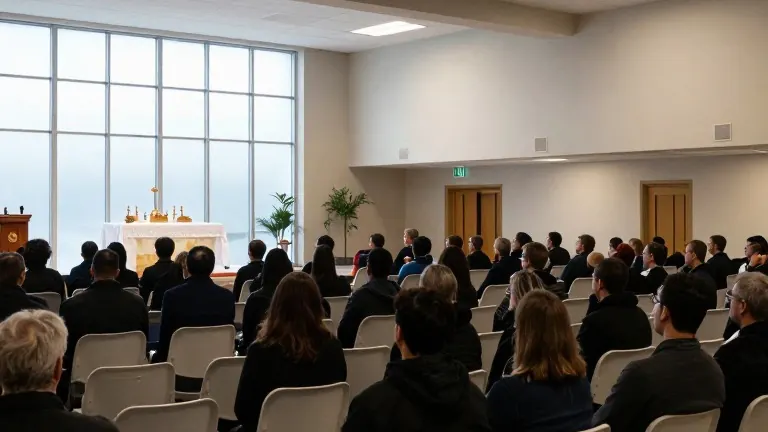
The Vatican has approved the beatification of five Franciscan friars killed in Georgia in 1597, with a public ceremony scheduled for Saturday in Savannah. The Catholic Diocese of Savannah expects 10,000 people to attend the Mass at the city's convention center, a venue selected because church capacity is insufficient for the crowd. The gathering will include bishops arriving from Spain, Rome and Africa.
The case moved forward after Pope Francis signed a decree in January 2025, shortly before his death, determining that the missionaries died as martyrs. Beatification is a required step toward sainthood, which would depend on a verified miracle attributed to the friars. Bishop Stephen Parkes, who leads the Savannah diocese, said the church does not actively seek a miracle but accepts that one may occur.
The violence occurred on September 14, 1597, roughly 430 years ago. Friar Pedro de Corpa confronted Juanillo, a baptized Christian and nephew of a Guale chieftain, over a planned second marriage. Juanillo later led warriors to de Corpa's hut before morning Mass, where the friar was killed with stone clubs. Four other friars, Blas Rodriguez, Miguel de Anon, Antonio de Badajoz and Francisco de Verascola, were slain at nearby missions in the following days.
The friars had lived in Guale villages for about two years prior to the killings. John Worth, a historical archaeology professor at the University of West Florida who has studied the Guale for four decades, said missionaries served as intermediaries for Spain, establishing churches and supplying iron tools while demanding conversion to Christianity.
Historians have disputed the Vatican's martyrdom finding, with some arguing the missionaries were casualties of a political struggle between Guale rivals rather than religious persecution. Beatification requires proof that the victims died at the hands of religious persecutors. Surviving Friar Pedro Fernandez wrote to Spanish Florida's governor in October 1597 that the dead men were "little lambs, at the moment of martyrdom." Guale men later told Spanish authorities the friars had interfered with ancestral traditions, including the practice of men taking multiple wives.
The road to recognition stretched over decades. U.S. bishops first proposed the candidates in the 1950s, and the Diocese of Savannah joined the effort in 1984. A Franciscan historian delivered a 500-page case file to Rome in 2007, followed by nearly 20 years of doctrinal review. Rev. Pablo Migone, who served as the diocese's chief promoter of the case for the past decade, said, "A strong historical case had to be made to Rome to do this."
The Guale people did not survive the colonial era intact. Raids by English settlers captured Guale men and women for slavery, and by the mid-1700s the remaining population had fled to Cuba or merged with other tribes. Modern descendants belong to the Muscogee (Creek) Nation. RaeLynn Butler, the Nation's secretary of culture and humanities, said in a statement that "the history of the Guale people extends far beyond those events."