
Lake Powell Rises 12 Feet After Phoenix Storms, Yet Remains at 25% Capacity
Arizona State University researchers note that recent rainfall provides temporary relief but fails to address the structural deficit in the Colorado River system.
By Grace Anderson ·
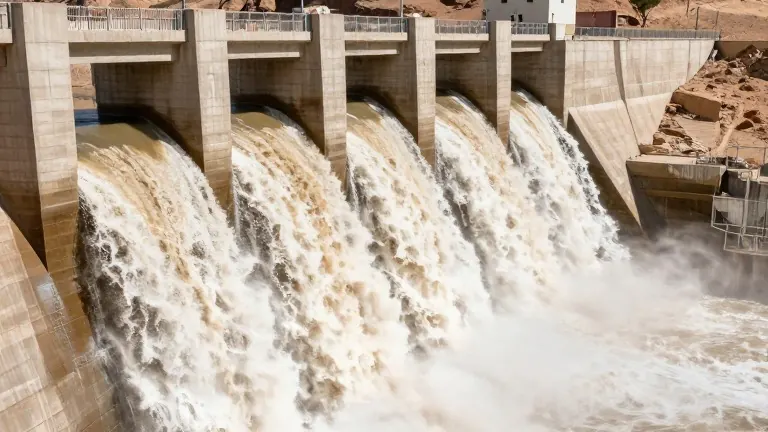
Recent storm systems over the Phoenix metropolitan area increased water levels in Arizona's major reservoirs. Lake Powell, the state's largest reservoir, recorded a 12-foot rise over two weeks, according to Sarah Porter, director of the Kyl Center for Water Policy at Arizona State University. Despite this gain, the reservoir currently holds approximately 25% of its total capacity.
Porter stated that while the added volume provides immediate utility, it does not resolve the long-term water shortage facing the region. She noted that local precipitation is insufficient to offset the multi-year deficit in the Colorado River system. The reservoir remains at a level that prevents officials from declaring the crisis over or reducing conservation efforts for the remainder of the year.
Downstream, Lake Mead, the nation's second-largest reservoir, sits at approximately 23% capacity following the same weather events. The recent downpours replenished some local sources but also triggered destructive flooding in several rural communities across Arizona. Water policy experts caution that rain in desert valleys cannot substitute for the winter snowpack required to sustain regional supply.
Porter emphasized that the primary source of the river's flow is not local rainfall but high-altitude snow. More than 80% of the flow in the Colorado River system originates from snowpack in the upper Rocky Mountains of Colorado, Wyoming, and Utah. Rain falling in the Phoenix valley does not directly feed these headwaters.
The distinction between local relief and systemic recovery remains a central point of discussion among water managers. Porter said the region needs snowpack in the upper Rockies to stabilize long-term supply. The current increase in reservoir levels is described as helpful but not a solution to the underlying deficit.