US Midterm Results Prompt Debate Over Iran War Exit Strategy
Newly elected officials across the political spectrum are questioning the scope and duration of the conflict that began in February.
By Camila Herrera ·

WASHINGTON, D.C. With the November midterms concluded, a consensus is forming among new and returning officials that the United States must begin winding down its involvement in the Iran war. The shift in sentiment is visible among recently elected figures, including Florida Governor-Elect Byron Donalds and Senator Mark Kelly, who discussed the conflict on November 4. The central question facing the administration is no longer how to enter the war, but how to exit it, a process historically more complex than the initial decision to engage.
The current conflict, which began in February 2026, differs sharply from the strikes in June 2025 that targeted Iran’s nuclear program. While the earlier attacks were narrowly tailored, the present war has expanded into a multi-faceted naval campaign. Israel’s Prime Minister stated that he ordered the IDF and intelligence services to topple the Iranian regime. The Trump administration has not adopted this as an official goal, instead citing the prevention of Iranian nuclear weapons as its primary objective. However, the conflict has grown beyond that scope, complicating the path to a conclusion.
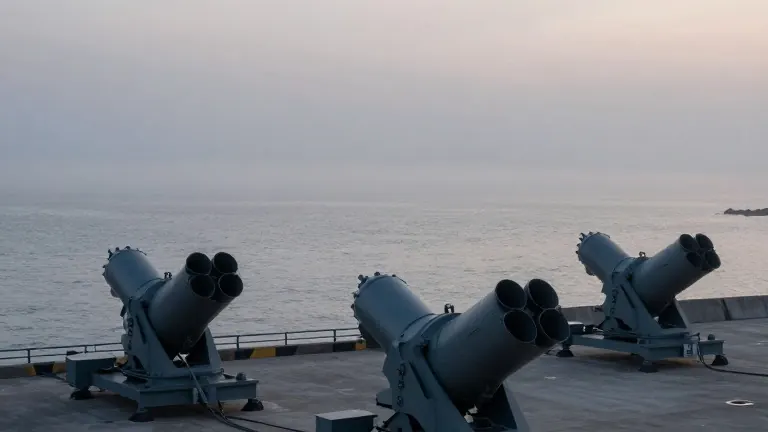
Iran has responded to the attacks by targeting shipping, transforming the engagement into a complex maritime operation. Analysts describe this expansion as mission creep, a phenomenon where the scope of a war widens beyond its original parameters. This development mirrors the challenges faced in previous conflicts, such as the Global War on Terror and the 2014 campaign against ISIS in Iraq. The US role in Iraq ended on September 30, 2026, illustrating that even narrowly tailored missions can become difficult to terminate once deployed.
The concept of the Powell doctrine, derived from lessons learned in Vietnam, suggests that US military involvement requires clear and attainable objectives. This principle guided the 1991 Gulf War, where the US successfully defended Kuwait after Iraq’s invasion. However, subsequent conflicts often lacked such clarity. The current debate in Washington focuses less on defining specific goals and more on the general trajectory of the war. This ambiguity has become a focal point in the post-election discourse.
Time is a critical factor in the current strategic calculus. Former Defense Secretary Donald Rumsfeld identified the time constraint as a known known when the war began. The US public, regardless of party affiliation, has expressed a desire to end endless wars. Both the Obama and Trump administrations have sought to reduce the US role in open-ended conflicts. The Gaza war, which began with the Hamas attack and has continued for more than 1,100 days, serves as a contemporary example of a conflict lacking a clear strategic endpoint.
Israel, which has historically favored fast and decisive wars, is also facing questions about its objectives. The conflict has expanded to include new goals in Lebanon and the stated aim of overthrowing the Iranian regime. Following Israel’s recent elections, these objectives may shift, prompting a reassessment of the joint strategy between the two nations that struck Iran in February. The alignment of political incentives and military realities remains under scrutiny as both countries evaluate their next steps.
Discussions in July and October 2026 regarding a new intense bombing campaign did not clarify how this effort would differ from the original campaign. Questions persist regarding why the nuclear program, the stated reason for the conflict, has not been dismantled despite the duration of the war. As the midterm results solidify, the window for strategic options may narrow. The administration and its allies face the task of defining the endgame in a conflict that has already exceeded its initial scope.
The political landscape following the midterms places pressure on the leadership to articulate a clear path forward. The consensus that the war should wind down is gaining traction, but the mechanism for that withdrawal remains undefined. The complexity of the naval campaign and the divergent goals between the US and Israel add layers to the decision-making process. As the conflict continues, the lack of clarity regarding the nuclear program and the broader strategic objectives leaves the future course of the war open to further debate and potential escalation.