Australia Takes Helm of UN Climate Talks Amid Fossil Fuel Tensions
Minister Chris Bowen must lead nearly 200 nations toward a 2035 electrification goal while managing domestic pressure to halt new coal and gas projects.
By William Turner ·
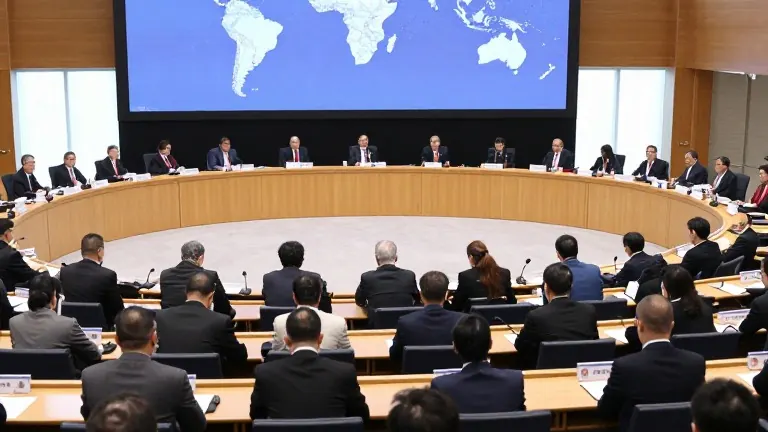
Australian climate minister Chris Bowen faces an immediate challenge as he assumes the presidency of the Cop31 climate negotiations in Antalya, Turkey, beginning this week. The core conflict for Australia’s leadership is its dual identity as a major fossil fuel exporter and the chief negotiator tasked with guiding the global transition away from oil, gas, and coal. Bowen must broker consensus among nearly 200 countries while his own nation’s export industries generate billions in revenue.
The talks open against the backdrop of a global oil price crisis driven by Middle East conflicts. Climate scientists recently confirmed that global heating will reach at least 1.8 degrees Celsius. The primary objective of the conference is to secure support for a new 2035 goal: having 35 percent of final global energy use come from electricity rather than fossil fuels. Turkey and Australia both sought hosting rights and settled on a compromise, with Turkey serving as the conference president and Australia leading the negotiations.
Australia holds a unique position in global energy markets. It is the world’s second largest exporter of thermal coal and the largest exporter of coking coal for steelmaking. Approximately one fifth of global liquefied natural gas exports originate from Australian shores. The government projects that the export value of these three fuels will reach 141 billion Australian dollars, or 98 billion US dollars, in the current financial year.
Bowen identified three main areas of focus during the two-week summit: minimizing temperature overshoot beyond the 1.5 degree Celsius Paris Agreement limit, securing climate finance for vulnerable nations, and advancing the electrification goal. Ocean protection is also expected to be a major theme. While climate advocates question whether a major fossil fuel producer can credibly push for a transition, Bowen dismissed the concern, noting that Australia’s domestic shift away from coal in electricity generation has been recognized internationally.
A central point of contention is the absence of a formal agenda item requiring countries to develop detailed plans to phase out fossil fuels. Bill Hare, chief executive of Climate Analytics, argued that Australia should push for a fossil fuel roadmap. He stated that fossil fuels account for 75 percent of global emissions, making a rapid transition essential for limiting overshoot. Brazil published its first global fossil fuel roadmap earlier this week, though experts noted a lack of specific benchmarks or timelines.
Domestic politics complicate Australia’s stance. The opposition Coalition pledges to scrap the 2050 net zero target, while One Nation rejects the science of climate change. Prime Minister Anthony Albanese must navigate these divisions as he prepares to speak during a two-day leaders summit. More than 500 Australian scientists and academics wrote to the Prime Minister this week, urging him to end new coal and gas approvals and legislate a phase-out plan to protect workers.
Kathryn McCallum, director of strategy at Climate Action Network Australia, pointed out that the Albanese government has approved 38 coal, oil, and gas projects since taking office in 2022. This includes extending the life of Woodside’s North West Shelf gas processing facility in Western Australia until 2070. McCallum argued that approving new projects while advocating for global limits creates a perception of hypocrisy among international partners.
Experts doubt that a broad agreement on fossil fuel phase-out will be included in the final cover decision, which requires consensus from all participants. Frank Jotzo, an economist at the Australian National University, predicted that Australia would prioritize an orderly procedure to avoid surprises. He suggested that countries preferring to keep fossil fuels out of the formal agenda would likely prevail, leading to a cautious approach by the Australian presidency.