Election Shift: Palestinian Parties Gain Seven Seats in Knesset
Exit polls show a seven-seat increase for Arab Israeli groups, forcing opposition leader Gadi Eisenkot to negotiate with parties he previously excluded.
By Camila Herrera ·
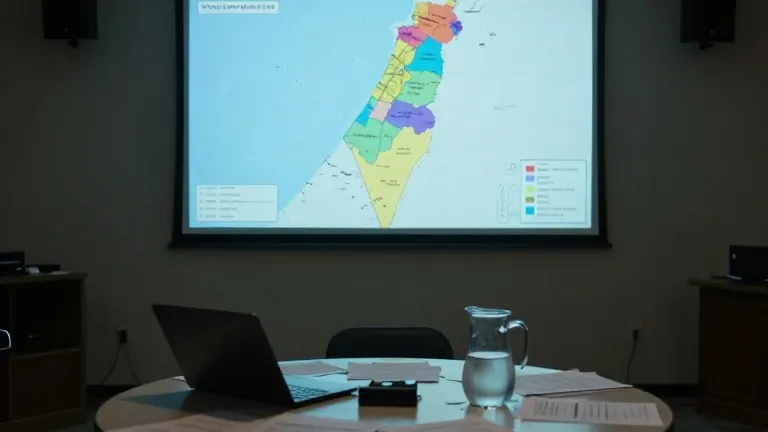
Palestinian political parties are projected to win 17 to 18 seats in the new Israeli Knesset, up from 10 in the previous legislature. This surge, confirmed by exit polls released after Tuesday's general election, marks the largest single change in the composition of the Israeli parliament.
The gains create an immediate structural problem for the opposition bloc led by Gadi Eisenkot. To form a majority government, Eisenkot must secure enough votes to reach 61 seats in the 120-member Knesset. With the opposition bloc holding a narrow lead over the governing coalition, the Palestinian parties hold the balance of power.
Eisenkot has outlined four specific conditions for coalition talks with the Joint List, the larger of the two Palestinian groupings. He requires recognition of Israel as a Jewish and democratic state, acceptance of the values in the declaration of independence, mandatory conscription for Palestinian Israeli citizens, and an official denunciation of Hamas as a terrorist organization.
Amjad Shbita, general secretary of Hadash, the largest faction within the Joint List, rejected these prerequisites. Speaking on Tuesday during the count, Shbita stated that Eisenkot would be in no position to impose terms. He added, “Laying down conditions won’t work with the Joint List. We will negotiate as equals because we need each other.”
Negotiations with the second Palestinian grouping, Ra’am, may present fewer ideological hurdles. Ra’am is projected to win seven seats. Its leader, Mansour Abbas, previously served in the right-leaning government of Naftali Bennett. Abbas has declared his priority is to “bring down Benjamin Netanyahu, [Bezalel] Smotrich, and [Itamar] Ben-Gvir in this election.”
The Joint List is projected to win 10 or more seats. If Eisenkot can secure a pact with both Ra’am and the Joint List, he can form a stable majority. If he can only secure Ra’am, he may lack the necessary numbers. In that scenario, Eisenkot could attempt to govern as a minority coalition relying on informal, vote-by-vote agreements to stay in power.
President Isaac Herzog has discretion over which candidate to ask first to form a government. If the first candidate fails to secure a majority within six weeks, the mandate passes to the next option. This process could extend the current caretaker government, led by Prime Minister Benjamin Netanyahu, for several months.
Eisenkot declared the exit polls a victory for “Israel’s Zionist national majority.” However, the political reality requires him to seat Arab Israeli ministers or face a fragile minority government. A minority government would likely trigger another election, providing Netanyahu an opportunity to rally conservative Jewish voters using his campaign slogan, “the Right or Palestine.”
A party official for the Joint List spoke from a victory celebration in Nazareth in the early hours of Wednesday. He noted that the Zionist opposition now faces a binary choice between supremacy and building democracy.
Source: The Guardian