Qatar's 2031 Defense Plan Aims to Cut Reliance on US Support
Doha is mapping a six-pillar strategy to protect critical infrastructure and sustain military operations without external supply lines by 2031.
By Grace Anderson ·
Regional developments in the Gulf since the start of 2026 have pushed Qatar to reassess how much its defense depends on Washington, and Doha is now working toward a national capability designed to operate without direct US assistance.
The plan sets out a five-year objective to prevent threats, absorb initial attacks and maintain state continuity, rather than to build a force capable of fighting a major regional power alone. Qatar's geography, its energy export flows and its hosting of US forces give it leverage, but current protection still leans heavily on American support.
The proposal rests on six pillars: integrated air and missile defense, early warning and information sovereignty, protection of critical infrastructure, air and naval power, cybersecurity and electronic warfare, and a shift toward multiple security guarantees rather than reliance on one partner.
The air defense element is identified as the most pressing gap. The target by 2031 is a layered radar network combining civilian and military systems under a single national command center, covering short, medium and long-range interceptors alongside counter-drone and electronic warfare tools. Qatar would also hold larger stockpiles of ammunition and spare parts, with dispersal across multiple locations.
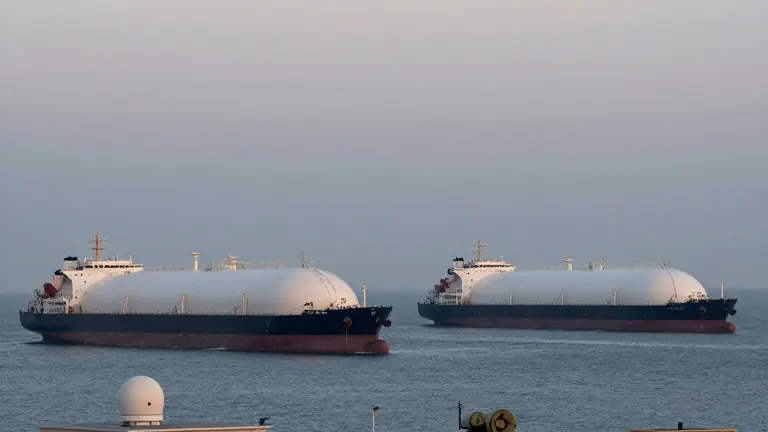
The strategy also calls for an air force that can keep flying for weeks if external supply lines are cut, including domestic maintenance capacity, more trained Qatari personnel, ground and aerial refueling, and increased stocks of drones. On the water, Qatar would expand maritime surveillance, counter-drone tools for its ports and protection for shipping routes carrying liquefied natural gas and oil.
A national resilience program would back up desalination plants, power stations, telecommunications, hospitals, data centers and fuel networks, so a failure at one facility does not become a countrywide crisis. Qatar would also build its own intelligence picture through space reconnaissance, unmanned aircraft, radar, electronic intelligence and AI-driven analysis, without waiting for an ally to flag an approaching threat.
The final pillar widens Qatar's partnerships beyond the United States, naming South Korea, Turkiye, European powers, Pakistan and China as options for specific cooperation. The plan states this diversification is not an alliance against Washington. The target date for the full package is 2031.
Source: Al Jazeera