G20 Cancels Group Photo After European Diplomats Object to Russia's Presence
The cancellation occurred on Thursday ahead of a two-day meeting in Atlanta that will set the stage for a December leaders' summit in Miami.
By Camila Herrera ·

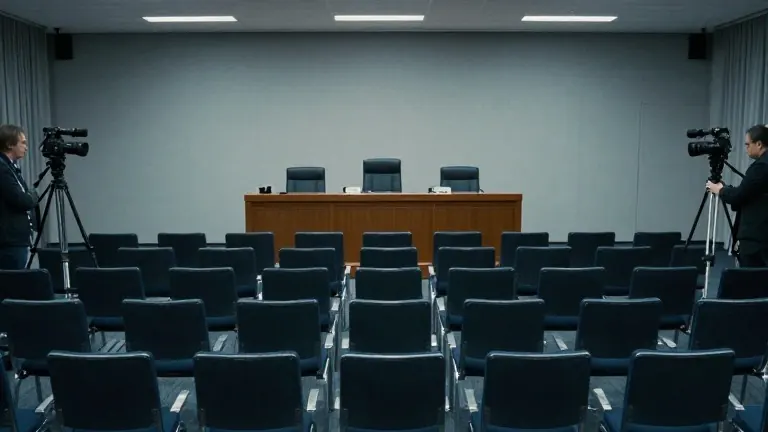
Diplomats from the Group of 20 largest world economies lost the opportunity for a unified visual representation on Thursday when the United States canceled a planned group photo. The decision followed objections from several European envoys who refused to stand beside Russian Foreign Minister Sergey Lavrov. U.S. officials stated that Secretary of State Marco Rubio made the call to scrap the image because the controversy would distract from the meeting's agenda. The gathering in Atlanta serves as a precursor to a summit hosted by President Donald Trump at his Miami golf club in December.
The two-day conference, chaired by Rubio, takes place against a backdrop of deep disagreement among member states. Topics include the Russia-Ukraine conflict, the U.S.-Israeli war against Iran, U.S. tariffs, and Chinese activity in the South China Sea. U.S. officials identify freedom of navigation in the Strait of Hormuz, Red Sea, Black Sea, and South China Sea as the top priority. They aim to find solutions to geopolitical crises that are driving up fuel costs and creating trade uncertainty.
Russia's participation has created friction within the group. Some G20 nations expressed concern over inviting Moscow while it intensifies attacks on Ukraine. Lavrov, who rarely travels to NATO states since the 2022 invasion, will use the platform to advocate for rapid reform of global economic institutions and a multipolar world. His presence complicates efforts to produce a unified Western message on the war in Ukraine. Ian Kelly, a former U.S. ambassador to Georgia, described the invitation as politically boneheaded given the timing of the mid-term elections.
The meeting also occurs amid speculation about renewed U.S. military strikes against Iran following the mid-term elections. U.S. officials have advised regional allies to prepare for potential retaliation. This prospect has put G20 member Saudi Arabia on edge. The United States invited Russia to the gathering even as it waived fresh sanctions on Moscow and limited logistical aid to Ukraine. These moves have unsettled European allies and raised questions about whether President Vladimir Putin will accept Trump's invitation to the December summit.
Two other notable absences mark the Atlanta roster. Ukraine, a non-member that attended previous meetings, was not invited this year. U.S. officials said they made a conscious choice to include only formal members. South Africa, a founding G20 member and the only African nation in the group, is also missing. The country is embroiled in disputes with the Trump administration. Spokesperson Phindile Kunene stated that South Africa's nonparticipation is not voluntary and that the nation is ready to join on an equal footing when Britain takes the presidency next year.
The State Department frames the event as a chance to advance practical cooperation on shared economic and security challenges. It points to threats to energy and food security and the need to preserve supply chains for critical minerals. However, analysts remain skeptical about the group's ability to overcome its substantial differences. Elaine Dezenski of the Foundation for Defense of Democracies called the meeting a test of whether the U.S. can build cooperation with partners when full consensus is out of reach.
The U.S. has previously worked outside the G20 framework to build coalitions that advance its foreign policy goals. Dezenski noted that the meeting offers a chance to assess if Washington can turn shared economic security concerns into meaningful cooperation without requiring unanimous agreement from all 20 members.