Voters in Brazil and Serbia reject Trump-backed candidates
Recent election results in five countries show a pattern of defeats for leaders aligned with the U.S. president.
By William Turner ·
President Donald Trump’s recent endorsements have not translated into electoral wins for his allies abroad.
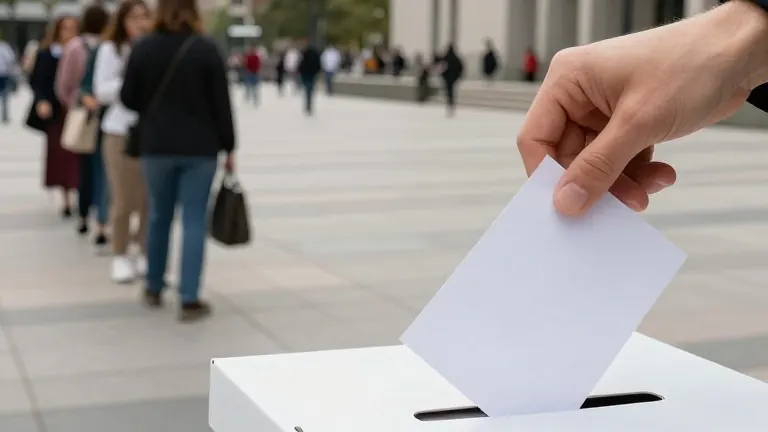
Luiz Inácio Lula da Silva secured reelection as Brazilian president on Sunday. He defeated Flávio Bolsonaro, a candidate aligned with Trump and the son of former ally Jair Bolsonaro. This result contrasts with Trump’s domestic success, where he claimed in August that 97% of the Republican candidates he supported won their primary races.
Similar results occurred in Serbia and Hungary. A student-led movement in Serbia defeated the ruling party of President Aleksandar Vucic last weekend. Vucic, who has cultivated ties with Trump’s circle since becoming president in 2017, cited external forces in his concession speech. He blamed the loss on the "legitimization of a revolution carried out by the people with direct support from various European countries and the American deep state." In Hungary, Prime Minister Viktor Orban lost his seat after 16 years in office. This defeat came despite a two-day visit by Vice President JD Vance earlier this year, during which Vance publicly backed Orban.
The trend extends to the Middle East. Trump endorsed Israeli Prime Minister Benjamin Netanyahu for reelection in October. The Associated Press reported on the October 27 election that Netanyahu’s Likud party appeared to lose its majority in parliament, though final results were not yet confirmed.
Political scientists suggest that national concerns often outweigh transnational alliances. Cas Mudde, a professor of international affairs at the University of Georgia, stated that elections are always national first, with regional or global factors serving as a distant second. Stijn van Kessel, a professor of comparative politics at Queen Mary University of London, noted that far-right politicians often claim global movement status but may distance themselves when relationships become politically toxic.
Van Kessel pointed to the earlier rift between Trump and Italian Prime Minister Giorgia Meloni. Meloni refused to allow U.S. aircraft to use a NATO airbase for the war on Iran. Trump later claimed Meloni "begged" for a photo at the G7 summit, a statement she denied.
David Barker, a professor of government at American University in Washington, D.C., observed that voters often abandon leaders when economic experiments fail. He said that at this point, Trump "undermines his allies' ability to maintain support." This dynamic exists even as right-wing movements remain strong in places like France, Germany, Argentina, and Colombia.